It is the tapestry of words interwoven since time began, alive with color and texture. Bridging that divide at times feels akin to juggling bright colors, where a few eventually drop. It is here that translate with ai steps in-the wizard who perhaps may turn this exquisite dance into a seamless symphony.
</=center>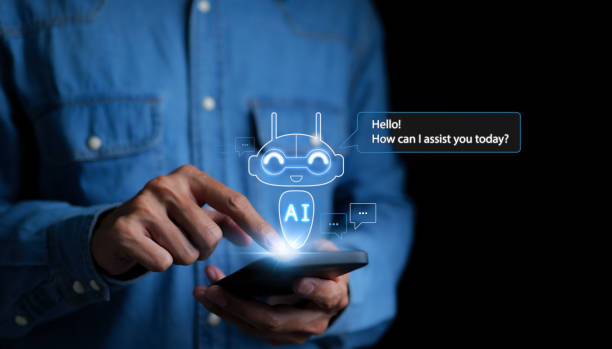
Imagine someone from another world had arrived, and the only way to communicate with him was through interpretive dance. Nice pirouette, Martian! That’s humanity-awkward pirouettes and twirls, trying to get meaning across languages. Under that awkward ballet, there could well be a seam of gold: a means, using AI, whereby their tongues speak our verses. Now, don’t reach for the tub of popcorn just yet; this isn’t some sort of magic show from Hollywood.
AI does its magic with a hat full of statistics and probabilities. Of course, a magician does not sing a lullaby. Sprinkle some words over a bit of code, voilà-machines try to out-poet real humans. Crazy, huh? Picture the robot which was made to translate a heart-tearing poem. That is like trying to teach a toaster to play chess. Hope it is not a stalemate!
Why such complication? Think of idioms: every language has its secret handshakes and winks that make absolutely no sense to anyone else but them. AI ingests millions of phrases, and then it may come across “kick the bucket”. N’ah, the bucket stays. intact.
But AI is one that rolls up its sleeves to plunge into the data pools, ever sharpening its linguistic sword. Thus, plunged in large masses of texts, it comes out, if not a poet, at least a correct scribe: a wizard learning his craft.
But don’t invite it to your book club just yet. Anyone who has ever tried to auto-correct a spicy message knows just how hilariously machines can go off the mark. Now extend this slip to phrases across cultures, oceans, even galaxies. Therein lies the challenge. To translate doesn’t simply mean to swap; it must adapt, morph, evolve on linguistic stilts.
Curiously enough, these machines are never clueless: a team of linguists and technology wizards at the wings add context-the fairy dust. Senseis to AI, they ensure the little android remembers that grandma does not live in a motherboard.
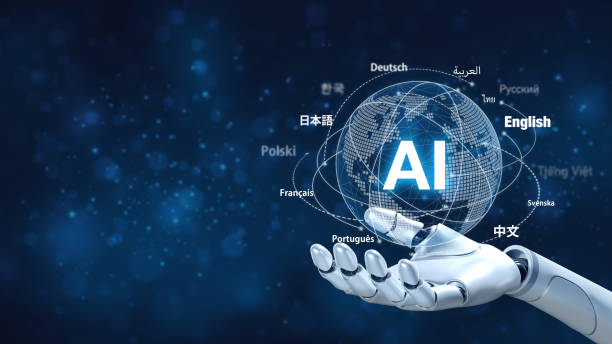
Interesting, since AI is not hammer-and-nails kinds of technology; it’s Picasso meeting Spock-perfections dazzling in their brush stroke niceties of type make English thespians on caffeine. Take the word “bark”: a sound, a texture, an order. Whatever tree you are barking up, context is king. AI picks up on these shades rather gradually, much like humans unravel the mystery called sarcasm.
But again, perhaps in the head, artificial intelligence, the pilferer of our linguistic jobs, be unafraid. These gizmos are more Robin to our Batman-sidekick stuff: we are still leading, imagining, while they translate and ask, “Does this jacket look blue or cerulean?” Still, it’s up to us humans to give it that little push toward clarity. We can’t let it serve orange juice when life gives it lemons, can we?
But why stop there when it’s so accessible? The concept of AI is like that squirrel on caffeine, who would not let himself sleep. Already, it can translate such amounts of information, manuals, subtitles, and more. Corporations love AI like raccoons finding an open trash can-zero hesitation. It saves money and time, allowing humans like us to get down deep into the more human parts of communication.
Knowing such machines work untiringly, furiously learning, one wonders what will follow next. Probably decades from now, AI will dive into more subtle human emotions, echoing back the whispers of our unsaid thoughts, or probably they will just be at confusing breadsticks for baguettes-who knows?
Whatever that might be, with us being humans, it is observed, enriching because one is curious about and humanizes such a possibility. Language is one great magnificent tapestry, complex in its timeless way. AI can be our thread, weaving contacts together, every stitch as important as the last. But let us not forget, it’s not words we exchange but pieces of kaleidoscope souls.
So let’s not be afraid to boldly go into this brave new world, taking AI with us-not as masters but as duet partners. Let’s sing, dance, and tell stories to get AI to harmonize along. Remember, in this big, unpredictable disco of life, AI is only human-the narrated echoes of us. Catch the rhythm, seize the dance. The music plays on.
While AI continues improving, the technological and linguistic points keep doing the interesting ballet, in which every move is fascinating to the onlookers. Think about the novelty of AI in respect to the young child who tries to do better with every note of a new instrument. Laid out before us is the promise of a multi-lingual future-in a world where barriers to communication shall not exist but will dissolve into a free, uninhibited dialogue across the globe.
Yet in that sophistication lies huge responsibility: We are the composers, creating this symphony, guiding the maestro’s hand. Ethical implications, cultural sensitivities, and privacy concerns become overriding. We must teach the digital apprentice the gentle nuances of mutual respect so that its aim of linguistics fluency will never compromise the harmony of diversity.
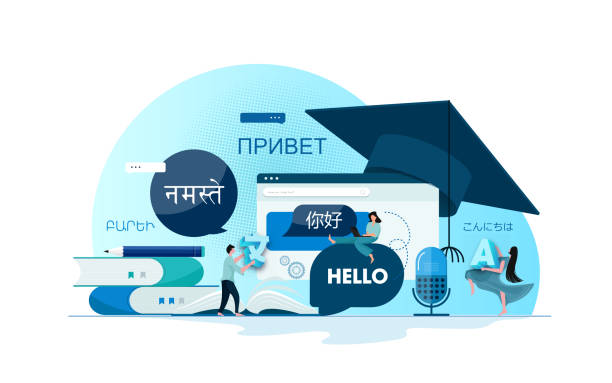
It has opened great perspectives, such as companies whose activities flow across borders, educational materials that make their way to the most out-of-the-way parts of the world, and humanitarian relationships increased due to time freely available. AI has gone past merely bridging gaps, as would be depicted by a book whose pages self-translate into a discourse inviting all comers to the table, by building spikes in the ocean of languages.
However, with any strong tool, the flippancy begins. Misinformation may be spread, translations might not be apt, and there could be cultural missteps. The catch is this: as fast as the technology races, so must our understanding and regulation. It’s that delicate balance between innovation and caution where humans are still the ones carrying the torch.
The beauty even lies in human fallibility-the darling slipups that remind us of our humanness. And yes, while AI rises to the challenge of perfection in translation, surely we would not want to miss that richness now and then when things get “lost in translation”-the smiles brought about by such delightful imperfections. That mesh of machine precision with human warmth weaves out a tapestry full, not just of accuracy, but of life.