Artificial Intelligence (AI) has revolutionized many fields, and one of the maximum thrilling regions is Natural Language Processing (NLP). NLP is a branch of AI focused at the interplay among computers and human language. It lets in machines to understand, interpret, and generate human language in a manner that is significant and beneficial. In this article, we’re able to discover the feature of NLP in AI language learning, highlighting its significance, programs, and future functionality.

Understanding Natural Language Processing (NLP)
NLP is a subfield of AI centered at the interplay among computer structures and human beings via natural language. It encompasses quite a number of duties, including speech recognition, text analysis, translation, and sentiment analysis. By allowing machines to recognize and method human language, NLP serves as the spine for lots of AI programs, from virtual assistants like Siri and Alexa to sophisticated language models like GPT-4.
The Mechanisms Behind NLP
NLP is based on several core strategies and technologies to procedure and apprehend language:
Tokenization: This procedure includes breaking down textual content into smaller devices, or tokens, which can be as small as words or as big as sentences. Tokenization is step one in information and processing textual content.
Part-of-Speech Tagging: Once the textual content is tokenized, the next step is to pick out the part of speech for each token. This allows the system to recognize the function each word plays in a sentence.
Named Entity Recognition (NER): NER identifies and categorizes key elements in textual content, which includes names of humans, corporations, places, dates, and different important terms.
Sentiment Analysis: This method is used to determine the sentiment or emotional tone behind a bit of textual content. It’s extensively used in social media monitoring and purchaser comments analysis.
Machine Translation: NLP enables the interpretation of text from one language to another, taking into account cross-linguistic communication and information.
The Role of NLP in AI Language Learning
NLP is fundamental in coaching AI systems to apprehend and generate human language. Here’s the way it performs a crucial position in AI language learning:
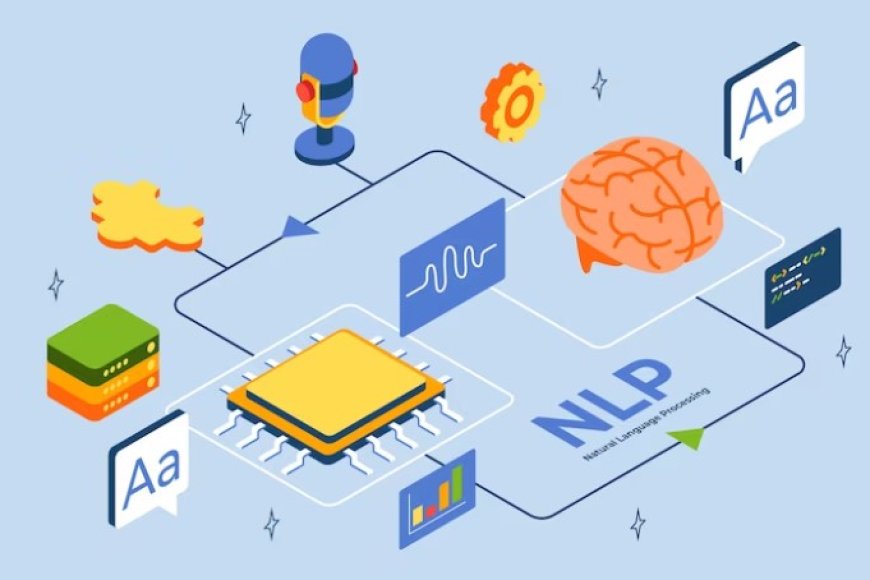
- Data Preprocessing:Before an AI model can examine from text, the facts have to be cleaned and preprocessed. NLP techniques like tokenization, stemming, and lemmatization put together the records for analysis.
- Language Understanding:NLP facilitates AI to apprehend the context and means of words in a sentence. This knowledge is vital for responsibilities like sentiment evaluation, where the AI ought to determine if a text is superb, bad, or impartial.
- Language Generation:AI models use NLP to generate human-like text. For instance, chatbots and virtual assistants depend upon NLP to produce coherent and contextually appropriate responses.
- Machine Translation:NLP enables AI to translate textual content from one language to any other accurately. This involves understanding the syntax and semantics of each source and target language.
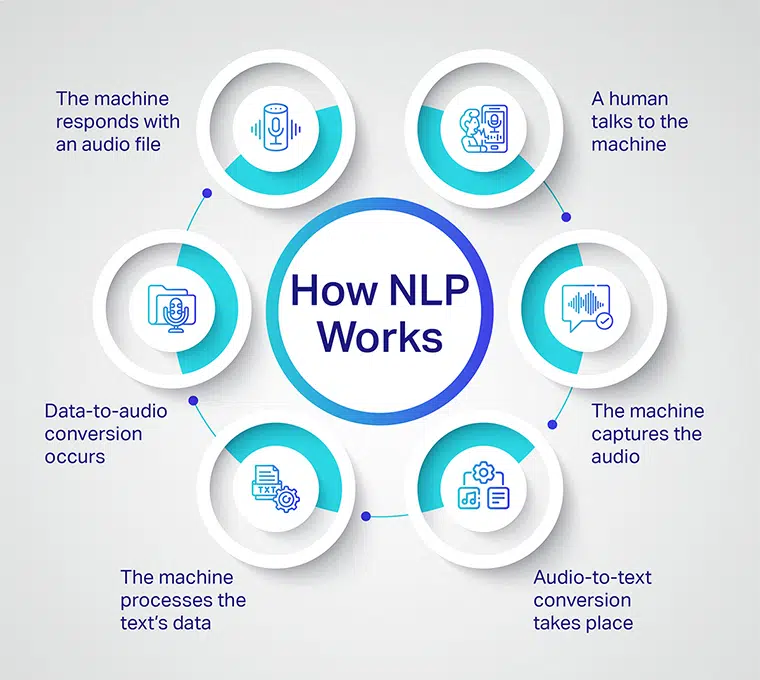
- Speech Recognition and Synthesis:NLP plays an essential role in changing spoken language into textual content (speech recognition) and generating spoken language from textual content (speech synthesis). This is vital for applications like virtual assistants and voice-activated systems.
Applications of NLP in AI Language Learning
NLP has a wide variety of applications in AI language learning, which includes:
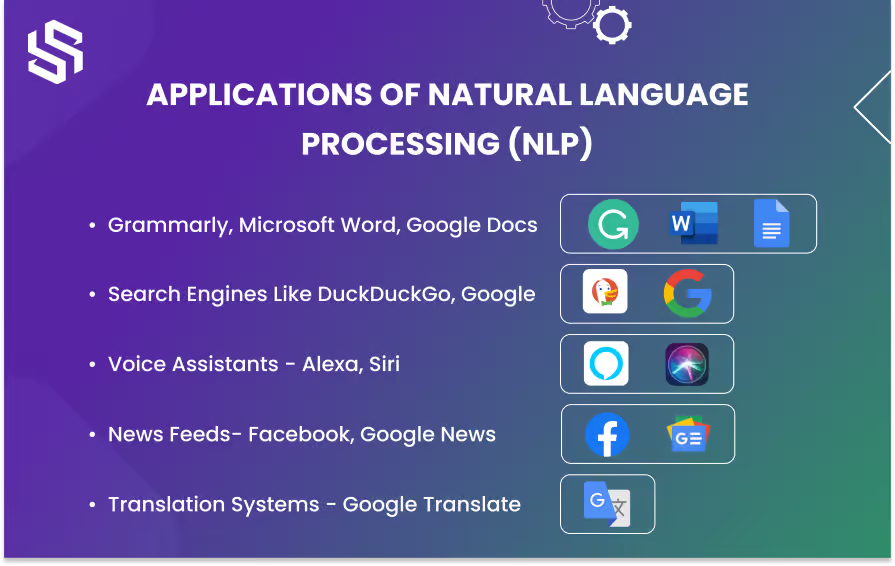
- Chatbots and Virtual Assistants:These AI structures use NLP to apprehend and respond to consumer queries in a natural, conversational manner. Examples encompass Apple’s Siri, Amazon’s Alexa, and Google Assistant.
- Machine Translation:Tools like Google Translate use NLP to provide correct translations between more than one language. This facilitates spoil down language barriers and allows global conversation.
- Sentiment Analysis:Businesses use NLP to investigate consumer feedback and social media posts to gauge public sentiment. This enables them to understand consumer evaluations and improve their products and services.
- Content Generation:NLP-powered AI can generate human-like text for diverse purposes, which include writing articles, growing summaries, and producing creative content material.
- Speech Recognition:NLP permits speech-to-textual content conversion, making it easier to transcribe spoken language and interact with voice-activated systems.
- Educational Tools:AI language learning tools use NLP to help college students master new languages, enhancing their writing skills and expertise in complex texts.
The Future of NLP in AI Language Learning
The future of NLP in AI language learning looks promising, with exciting developments on the horizon:

- Improved Language Models:Advances in language models, together with OpenAI’s GPT-4, are pushing the limits of what NLP can attain. These fashions have become greater able to knowledge and produce human language with greater accuracy and coherence.
- Cross-Lingual Models:Researchers are working on developing fashions that could take care of multiple languages simultaneously. This will enhance machine translation, multilingual chatbots, and different move-lingual programs.
- Human-AI Collaboration:NLP will facilitate better collaboration between human beings and AI structures. AI assistants turn into extra adept at information user cause and offering applicable assistance, leading to greater effective interactions.
- Ethical NLP:There will be a more potent recognition of growing moral NLP practices. Efforts to reduce bias, ensure privacy, and sell transparency will be prioritized to build honest AI systems.
- Integration with Other Technologies:NLP could be more and more integrated with different AI technologies, including laptop imaginative and prescient and robotics. This integration will enable extra complete and sophisticated AI programs across various domain names.
Conclusion
Natural Language Processing is a crucial aspect of the evolution of AI language learning. Its ability to recognize, interpret, and generate human language is reworking industries and improving human-AI interactions. As NLP continues to improve, it’ll increase new possibilities and drive similar innovations in AI. However, addressing the demanding situations and ethical worries related to NLP is crucial to make sure its responsible and beneficial use. The destiny of NLP in AI language gaining knowledge is brilliant, promising extra intuitive, green, and human-like interactions among machines and people.
Frequently Asked Questions (FAQs)
What is Natural Language Processing (NLP)?
Natural Language Processing is a subfield of AI focused on the interaction between computers and human language, enabling machines to understand, interpret, and generate human language.
How does NLP benefit AI language learning?
NLP permits AI structures to comprehend and generate human language, improving obligations, which include answering questions, conducting conversations, and providing applicable information.
What are some common applications of NLP?
NLP is used in diverse industries, along with healthcare, finance, customer service, advertising, and felony. It helps with responsibilities like sentiment evaluation, gadget translation, and personalized learning.
How do chatbots use NLP?
Chatbots use NLP to understand and reply to user queries in a natural and conversational manner, offering relevant facts and acting tasks.
What are the challenges in NLP?
Challenges in NLP consist of language ambiguity, context information, facts privateness, and bias in facts, all of which can affect the accuracy and reliability of NLP systems.